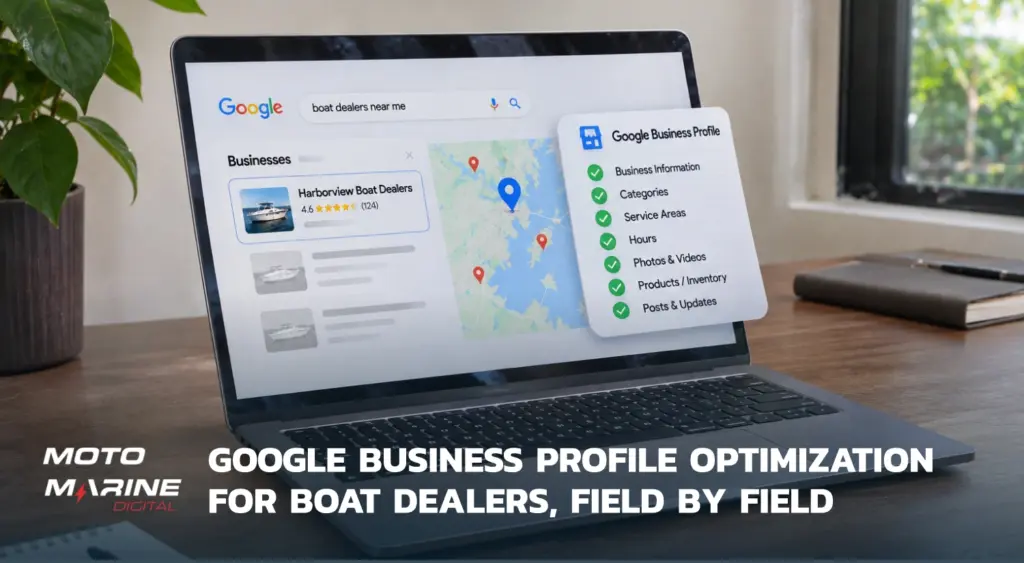
The map pack showed on 57 of the 64 “boat dealers [city]” searches in our study of US boating markets. In 34 of those 57, the dealership sitting at number one in that map pack had no website anywhere in the organic results below it.
Read that again, because it reframes the whole exercise. Those dealers won the most visible spot on the page without ranking a single page of their website. The profile did it on its own.
Most dealerships set one up years ago, verified it, and haven’t touched it since. Google Business Profile optimization is mostly a matter of filling in fields that have been sitting empty, in the right order.
How Google picks which boat dealers show in the map pack
Google says local results come down to three things. Relevance, distance and prominence.
Relevance is whether your profile matches what somebody typed, so a profile that never mentions pontoons won’t surface for pontoon searches. Distance is how close your lot is to the searcher, and you can’t do much about that. Prominence is how well known the business is, which is where reviews and links land.
Whitespark’s 2026 survey of local search professionals puts hard numbers on it, and sorting its top factors by who controls them tells you where to spend your time.
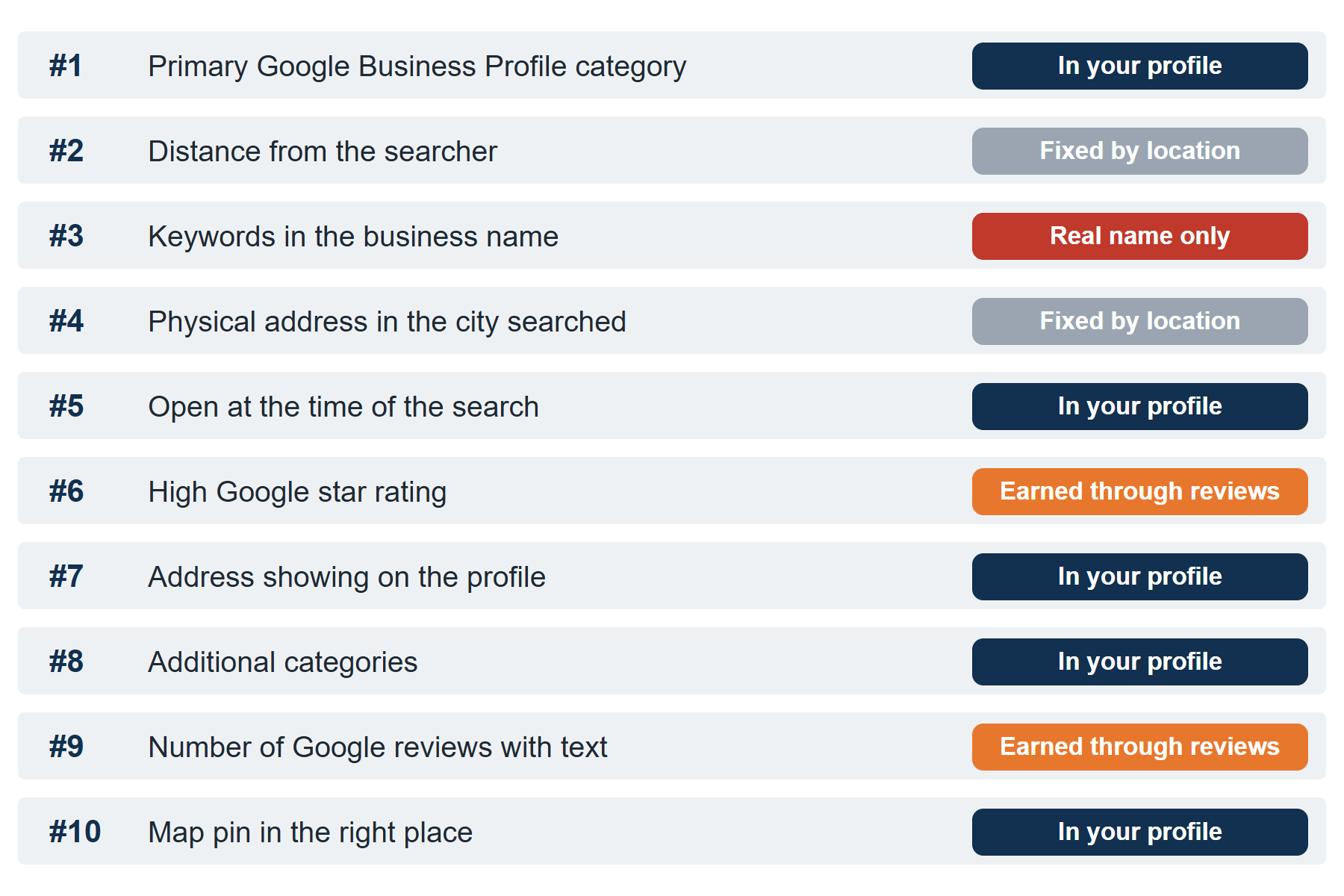
Source. Whitespark Local Search Ranking Factors 2026.
Two of the top ten are fixed by where your lot sits, and two come from reviews. Five are fields you fill in yourself, which is where the rest of this guide spends its time.
One thing worth saying plainly before you start. Google states there’s no way to request or pay for better local ranking, so treat anyone promising a map pack position as selling you something they can’t deliver.
Choosing the right categories for a boat dealership
Your primary category is the field that does the most work, and most dealers get it roughly right then stop.
Google’s own guidance is to use as few categories as possible, pick ones as specific as your actual business, and never add a category purely as a keyword. For a store whose revenue mostly comes from selling boats, “Boat dealer” is the primary. Everything else is secondary.
The secondary categories worth looking for depend on which departments you actually run.
| What you run | Category to look for |
|---|---|
| A service department open to the public | Boat repair shop |
| A parts and accessories counter | Marine supply store |
| Outboard sales separate from boat packages | Outboard motor store |
| Sea-Doo, WaveRunner or Jet Ski sales | Personal watercraft dealer |
| Trailer sales on their own | Boat trailer dealer |
| Dry stack, rack or winter storage | Boat storage facility |
| Slips you actually operate | Marina |
| ATV or side by side sales alongside boats | Powersports vehicle dealer |
Type the first few letters into the category field and take what Google offers. The exact wording shifts as Google renames and retires categories, so the list in your profile editor beats any list you’ll find written down, including this one.
The discipline is in what you leave out. Adding Marina because there’s water nearby, or Boat storage facility because you’ll park a boat in winter if someone asks nicely, pulls your profile toward searches you can’t serve. Google is explicit that categories aren’t keywords.
The name, address and hours rules that keep your profile live
Here’s an honest tension. Whitespark ranks keywords in the business name as the third strongest map pack factor, and Google’s guidelines say your name has to be your real world name.
Both are true. “Smith Marine” turning into “Smith Marine Pontoon Boats For Sale Lake Norman” might move you up for a while, and it’s also a suspension waiting to happen. Google’s rules say the name can’t carry marketing taglines, store codes, phone numbers or URLs. A suspended profile costs more than a few positions.
If your legal trading name genuinely includes a descriptor, use it. Don’t invent one.
Address and hours are simpler and more often wrong. Use the address with signage where customers actually show up, and never add a second address in a neighbouring town to chase that market. For hours, list the ones a customer can walk in and be served.
Then keep them current, because being open at the time of search sits in Whitespark’s top five. That means seasonal hours when service shifts for winter, and special hours for holiday weekends and the days your team is at a boat show. A profile showing closed on the Saturday of Memorial Day weekend is handing that search to someone else.
When your service department should have its own profile
Google allows publicly facing departments that operate as distinct entities to have their own profile, as long as each one carries a different name from the main business. Google’s own documentation uses a car dealer as the example, with a separate service and parts profile carrying the Auto Repair Shop category.
For a marine dealer, that maps cleanly. If your service department has its own entrance, its own phone line and its own hours, a separate profile named something like “Smith Marine Service Center” with the Boat repair shop category can appear for boat repair searches that your sales profile never shows up for.
The same logic covers a parts counter that customers walk into. Set up properly, a dealership with all three looks like this.
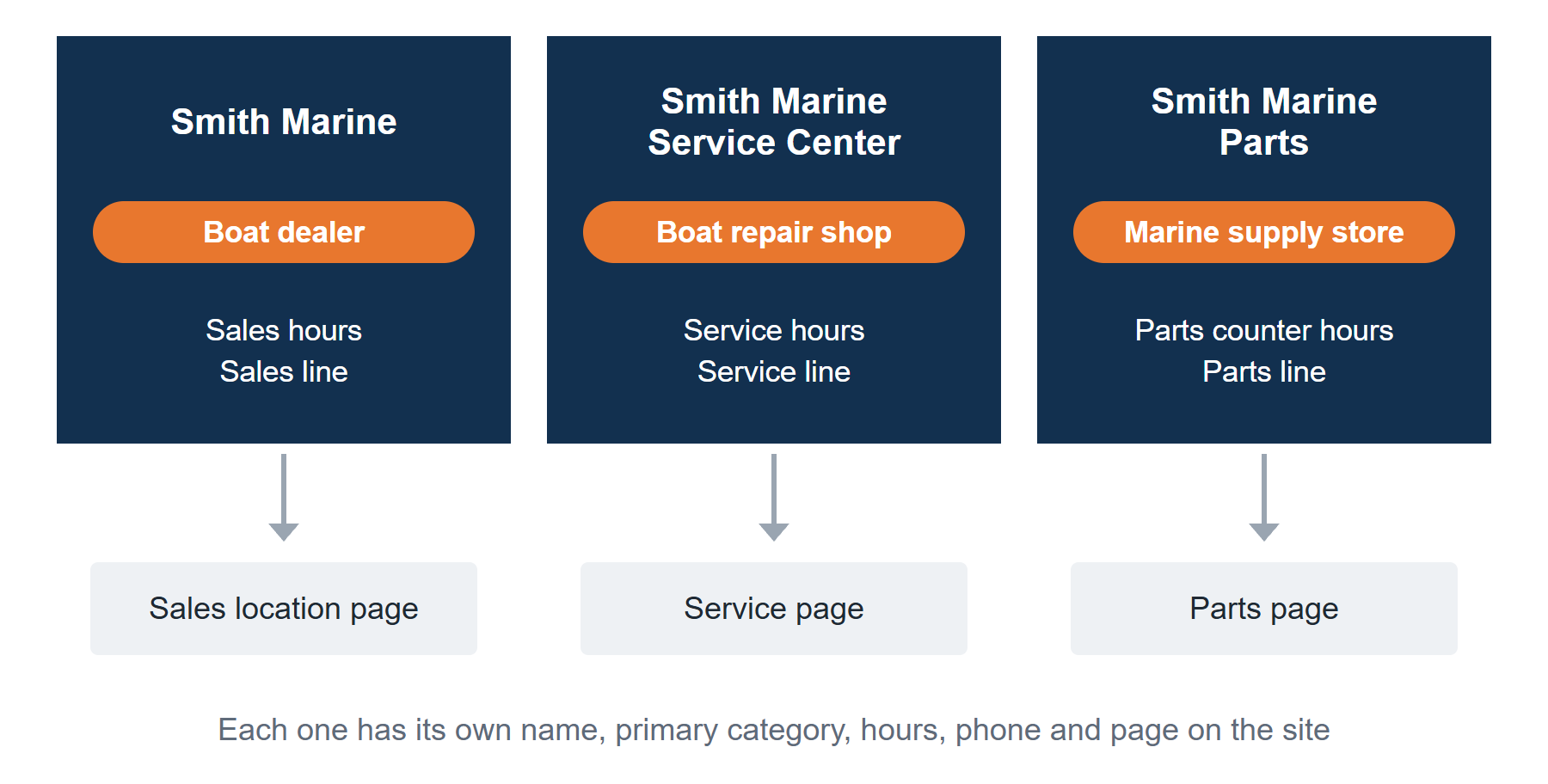
There are limits worth respecting. Google’s rule is one profile per location, and any department profile needs a name and a primary category different from the main business and from the other departments. That rules out splitting sales into pontoon sales and fishing boat sales, since both would be the same category under the same name.
Brands are a separate question, and the answer isn’t settled for marine. Google’s car dealership guidance does let a new car dealership run a profile for each brand it sells, while used car dealerships can’t. That guidance covers car dealerships only and says nothing about boats, so treat it as a reason to ask rather than a rule you can borrow. Until that’s clear, the brands you carry belong in your services, products and description.
Multi-location dealers get one profile per physical location, each one pointing at its own location page.
Services, products and the brands you carry
These two sections are where you tell Google what you actually do, and most dealer profiles leave them blank.
Services are the jobs your service department sells. Winterization, shrink wrap, spring commissioning, bottom painting, outboard repowers, trailer repair, detailing, financing. Add them with a plain sentence each, in the words a customer would use.
That work isn’t a sideline. Our seasonal research found that short season states generate 142.7 fall service searches for every 1,000 buying searches, so in northern markets the back half of the year runs on service demand, not boat shoppers.
Products are where the brands go. Add the lines you carry with a photo and a link through to the matching inventory or model page on your site. The aim isn’t to list every hull on the lot, because that’s what your inventory pages are for. It’s to make the profile say Bennington, Yamaha and Tracker where a buyer searching those names can see it.
Photos and posts that keep the profile current
Google names adding photos and videos as one of its own tips for local ranking, and it’s the cheapest thing on this list.
Shoot the real place. The storefront with your signage, the lot, the showroom floor, the service bay mid job, your staff, boats going out on delivery day with the customer’s permission, and units on the water. A stock marina sunset tells a buyer nothing about whether your lot is worth the drive.
Posts do something different from photos. They give a buyer looking at your profile something current to read, which matters most in the weeks either side of your season. One post a week in season and a couple a month off season is a realistic cadence, tied to real things. A boat show you’re attending, new model arrivals, the winterization cutoff date.
Reviews and the Ask button that replaced Q and A
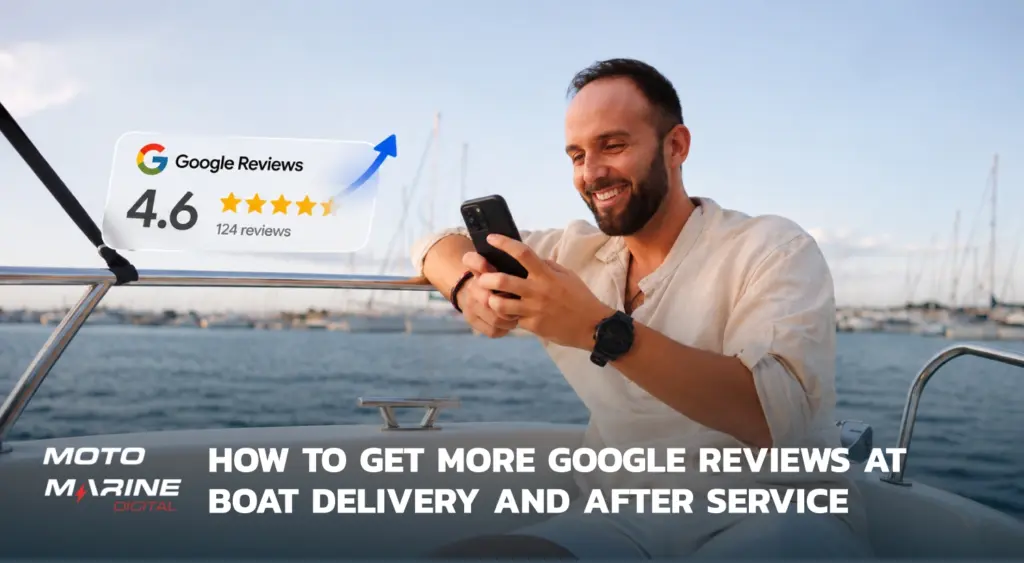
Reviews feed prominence, and they sit high in the factor list. High ratings ranked sixth in Whitespark’s 2026 survey and review quantity ninth. The median business at number one in the map pack carried a 4.6 rating and 124 reviews in our study, which is a useful benchmark for what the position costs in your market.
We’ve written a separate piece on how to get more Google reviews at delivery and after service, because the mechanics deserve their own page.
The newer change is one a lot of dealers missed. In December 2025 Google confirmed it’s retiring the customer facing Questions and Answers display in Maps and replacing it with an Ask button, which returns an answer built from your own answers and relevant reviews.
Answering still matters, it just works differently. The section stays reachable through your Business Profile, where you answer aggregated questions rather than replying to each one, and Google uses those answers to respond to similar questions from other customers.
So the facts buyers keep asking about are worth writing down once. Brands carried, financing, trade ins, service hours, storage. Answer them there, and keep the same details in your services and description, because reviews are the other input and you don’t control what those say.
Connecting the profile to the right page on your site
The website field on a multi-location profile should point at that location’s own page, not the homepage. Name, address, phone and hours on that page should match the profile exactly, because a buyer who finds a different phone number has a reason to doubt both.
Our study found the gap here is large. In 34 of 57 markets the map pack leader had no website presence in the organic results at all, which means plenty of dealerships are winning the profile race and losing everything underneath it. The profile gets the tap. The site has to carry the lead.
A monthly profile check
Put fifteen minutes in the calendar on the first of the month and work through five things.
- Hours, including special hours for the holidays and boat shows coming up.
- A handful of new photos from the lot, the service bay or a delivery.
- One post, tied to something real.
- Every review replied to, by name.
- Services and products still matching what you sell this season.
That’s the whole job. A profile that gets fifteen minutes a month beats one that got a full day two years ago.
If you’d rather hand it over, Moto Marine Digital manages Google Business Profile work for dealers on an SEO plan, alongside the website itself. Request a demo and we’ll look at your profile and your site together.
Frequently asked questions
What should a boat dealership use as its primary Google Business Profile category?
Boat dealer, for a store whose revenue mostly comes from selling boats. Google’s guidance is to pick the category that describes your core business and add as few others as possible. Whitespark’s 2026 survey ranked the primary category as the strongest map pack factor.
Can a boat dealership have separate profiles for sales and service?
Yes, when the service department operates as a distinct entity with its own entrance, phone and hours, and carries a different name from the main business. Google’s own example is a car dealer’s separate service and parts profile.
Can a boat dealership have a separate Google Business Profile for each brand it carries?
Google’s car dealership guidance allows it for new car dealerships and prohibits it for used car dealerships. That guidance covers car dealers only and doesn’t mention marine, so don’t assume it applies. Put the brands in your services, products and description instead.
What happened to the Questions and Answers section on Google Business Profiles?
Google confirmed in December 2025 that the customer facing Q and A display in Maps is being replaced by an Ask button, which answers using your own answers and relevant reviews. You can still answer aggregated questions through your Business Profile, and those answers feed what customers see.
Sources
- Moto Marine Digital, The Page One Report, 64 US boating markets, data pulled 9 October 2026. https://motomarinedigital.com/the-page-one-report-who-ranks-for-boat-dealers-city/
- Moto Marine Digital, boat dealer marketing calendar and seasonal zones. https://motomarinedigital.com/boat-dealer-marketing-calendar-seasonal-zones/
- Whitespark, Local Search Ranking Factors 2026. https://whitespark.ca/local-search-ranking-factors/
- Google Business Profile Help, Tips to improve your local ranking on Google. https://support.google.com/business/answer/7091
- Google Business Profile Help, Guidelines for representing your business on Google. https://support.google.com/business/answer/3038177
- Google Business Profile Help, Car dealership profile guidelines. https://support.google.com/business/answer/9074301
- PPC Land, Google replaces Business Profile Q&A with an Ask button, December 2025. https://ppc.land/google-quietly-kills-q-a-for-an-ai-button-most-wont-use/